
North Platte Previous Residents by Era
Past residents leave different kinds of evidence in different periods. A recorded deed identifies parties to a transfer, while a city directory or census may place a household at an address. North Platte has published examples and pointers rather than a confirmed unbroken directory run, so the safest approach is to use the table as a route map and cite each source precisely. The online and counter paths matter because older Lincoln County material can sit outside a current web search.
| Source | Years It Covers | Where Held | What It Shows |
|---|---|---|---|
| Recorded deed or instrument | Post-March-2000 instruments use instrument numbers; earlier records use book and page. Archive series dates 1890 to 1980. | Lincoln County Register of Deeds; History Nebraska RG218. | Transfer parties, legal description, record date, liens, and plat references. |
| County deed archive | 1890 to 1980 record-group dates. | History Nebraska Lincoln County RG218. | Historical instruments, indexes, and book series; exact reel and book mapping requires an archive request. |
| City directories | 1907-08, 1921, 1929, 1932, 1947, 1950, 1954, 1956, 1958, 1960, and 1986 are examples or pointers. | FamilySearch and genealogy pointers, library inquiry, and Polk catalog evidence. | Occupants, spouse or occupation details, and residence or business address. |
| Local newspapers | North Platte Republican begins in 1875; Lincoln County Tribune runs 1884 to 1946 in one archive listing, with other title runs through 1963. | Advantage Archives. | Notices, obituaries, sales, moves, construction stories, and community references. |
| Federal census | Released images follow the federal 72-year public-release rule. | NARA, library databases, and genealogy services. | Household composition, occupation, and precinct or address clues. |
| Building permits | No online local year range was published. | North Platte Building & Inspection. | Construction or remodel date and project-party, lot, block, zoning, or flood-zone details. |
Use the assessor and recorder first for a transfer question. Move to dated directories and census sources for an occupancy question. Permits and newspapers can explain a change, but neither should be treated as a complete household record.
North Platte Previous Residents Start With a Parcel
Begin with the address in Lincoln County gWorks. The combined quick search is labeled for property ID, address, or owner. Save the PID, situs address, owner field, mailing field, legal description, lot, block, subdivision, and map location. Those details let a historical address search survive a spelling difference or a later change in the way a street is written.
Keep the property or situs address separate from the owner mailing address. A mailing field is a tax-notice or correspondence destination, not proof that the owner lived on the parcel. Similarly, a current owner record says little by itself about the prior households who may have lived there. That distinction keeps a previous-residents search tied to its actual sources.
When an address does not return a result, check the directional prefix, suffix, unit, and current postal form. Map browse and the parcel ID are better next steps than guessing that the property never existed.
North Platte Deeds Use Two Reference Systems
The Register of Deeds describes a clear break in Lincoln County's reference language. Documents after March 2000 use an instrument number. Earlier documents are found through book and page references. Computer entry also creates numerical tract and grantor/grantee indexes, and every recorded document is indexed against its legal description. Write down both the search term and the reference found before moving to an earlier transfer.
The office lists deeds, mortgages, assignments, releases, construction liens, tax liens, UCC filings, plats, and original instruments among its records. Recorded documents are scanned and microfilmed. When an online path ends, use the counter, a mail or fax copy request after payment, the relevant book/page reference, or the History Nebraska archive route. The office began in 1921, but the archive's deeds series reaches back to 1890, so the office's creation date is not the first date for a property record.
A view of the Lincoln County deed records route shows the office used to extend North Platte past-household research beyond the parcel map.
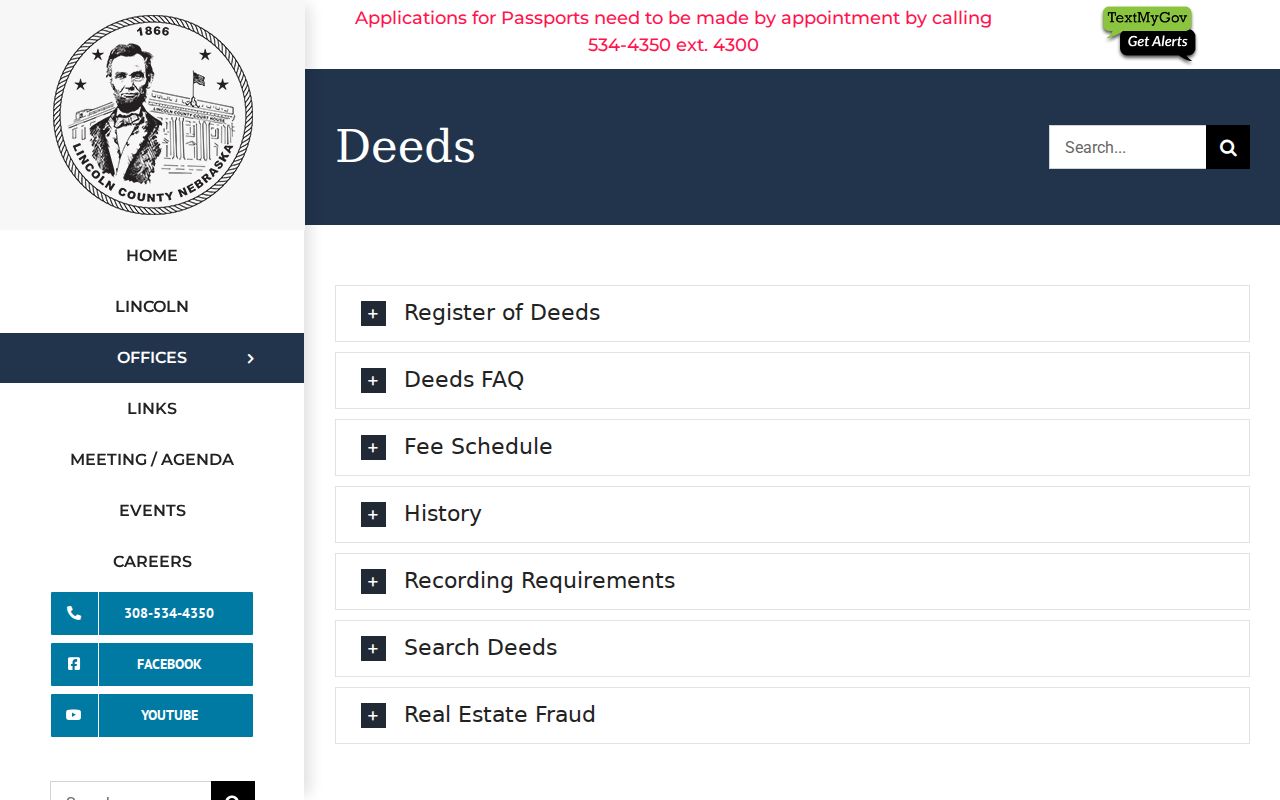
The post-March-2000 instrument-number cutoff helps determine whether the next search should use an instrument field or a book/page reference.
North Platte Past Ownership Through Deeds
A chain of title follows the property, not the household. Start with the current owner and legal description from the assessor roll. Find that owner's purchase as a grantee, inspect the instrument for the prior grantor and prior-reference language, then search the earlier party as a grantee for the same legal description. This sequence works backward through transfers while allowing for corporate names, trusts, estates, initials, and index variations.
- Search gWorks for the address and record the current owner, parcel ID, situs address, legal description, and lot, block, or subdivision details.
- Search the deed route using the legal description, current owner as grantee, and the likely transfer date.
- Read the purchase deed for the grantor, grantee, recording date, execution date, document type, and any previous instrument or book/page reference.
- Search the prior grantor as a grantee for the same legal description, checking name variants and entity names.
- Repeat backward. When the web index is incomplete, use the recorder counter, copy-request channels, microfilm or deed books, and the RG218 archive.
- Grantor
- The party giving or transferring an interest in a recorded instrument.
- Grantee
- The party receiving that interest. A prior grantee search often reveals an earlier purchase.
- Chain of title
- The sequence of recorded transfers for the same property. It documents ownership transactions, not every person who lived there.
- Legal description
- The lot, block, subdivision, or tract wording that identifies the real property in the deed. It is more stable than a street-address format.
North Platte Past Residents in Directories and Census
Use the ownership dates as bookmarks, then look for people at the address in the nearest available directory and census release. The documented North Platte pointers include 1907-08 material, 1921, 1929, and 1932 entries in the U.S. City and Business Directories collection, several later examples, Polk evidence for 1950 and 1954, and a 1986 Polk catalog listing. These are leads, not a claim that every year is available.
- Choose a directory year near a deed transfer and search by surname, business, residence, initials, or a hotel or boarding address when relevant.
- Transcribe the page's name, spouse notation, occupation, workplace, residence, and printed abbreviations rather than relying on a search summary.
- Compare the next available directory with the nearby decennial census year, observing the 72-year public-release rule for later census images.
- Test an apparent move with a newspaper notice, deed, permit, cemetery entry, probate file, or vital-record route.
The collections themselves, their known pointers, and entry-reading cautions are gathered in the North Platte Directory Book. A directory can identify a residence or work location for its printed year, while a census records a household at the time of enumeration. Neither should be stretched across dates it does not cover.
North Platte Library House-History Leads
The North Platte Public Library research catalog is the local fallback for a house-history question that cannot be resolved online. The official library pages do not publish exact city-directory years, reverse-directory holdings, obituary-index coverage, yearbook runs, or a named house-history guide. Ask local-history staff about criss-cross directories, old telephone books, maps, vertical files, obituary files, and the specific year needed instead of presuming that a collection exists.
The library reports a research service with the first 30 minutes free, then $20 per hour prorated, and a $50 rush charge for work requested in under three business days. A focused request that names the address, approximate year, and record type is more likely to reach a useful shelf or file than an open-ended request. The library's own institutional history also marks its 1912 public opening and 1967 current facility as local chronology points.
The North Platte Public Library history identifies the local institution that can route a previous-residents search to its historical collections.
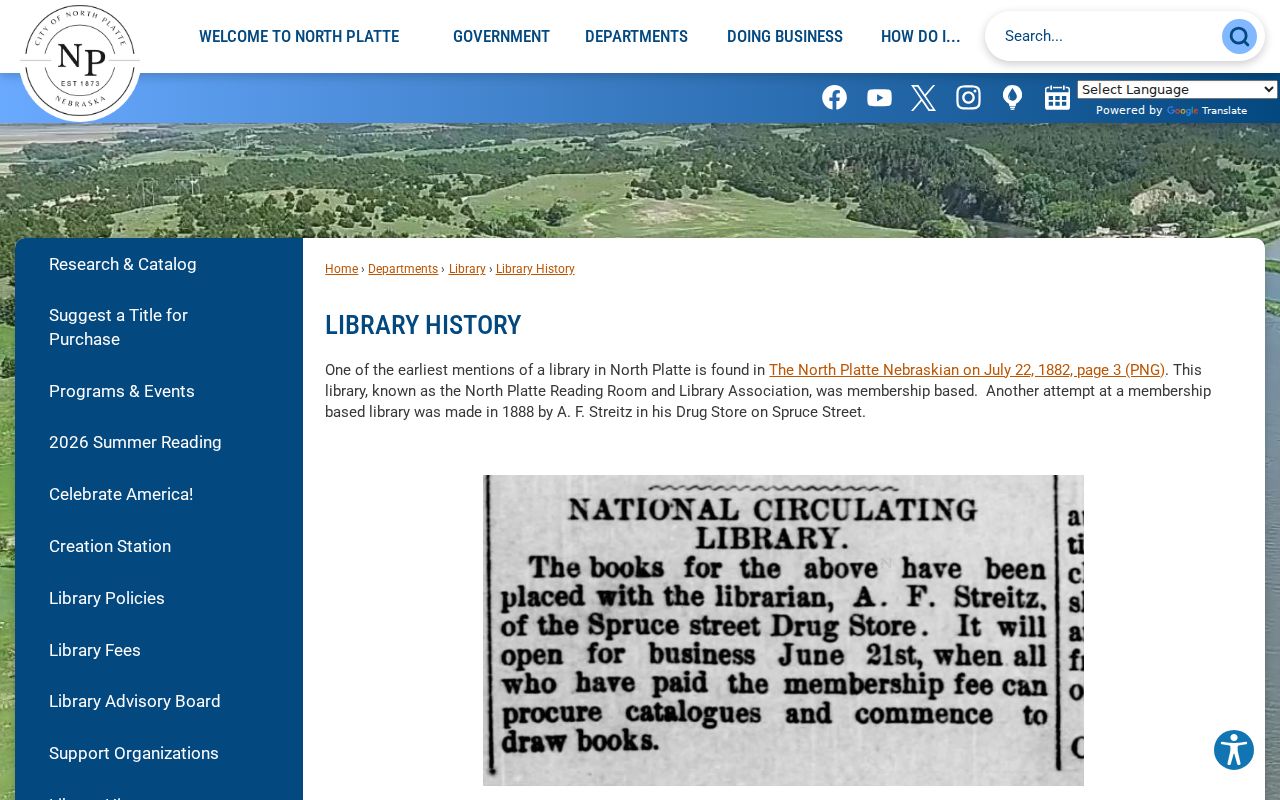
Use the library route to ask about a specific address and date span, especially where the online directory run or reverse-directory coverage is not published.
North Platte Previous Address Permit Dates
Building and Inspection materials can add a date-and-place clue to a house history. The city lists residential remodel, mechanical, right-of-way, miscellaneous, accessory-structure, and new-construction categories. Its residential application has fields for a job address, owner, contractor, architect, lot, block, subdivision, zoning, flood zone, and special conditions. Those fields can connect a project to an address and legal-location details.
There is no public searchable permit archive in the materials inspected. Contact North Platte Building & Inspection for existing records or use a written Nebraska Public Records Act request for an unposted record. State the address, approximate date, and project type. A permit may document work or a project party, but it does not establish who occupied the address.
Note: Permit activity expires after 180 days without recorded construction activity, which is a status rule rather than an occupancy record.
North Platte Past Households at Trail Endpoints
When a person disappears from a North Platte address, use record types that can explain the change rather than filling a gap with assumption. Advantage Archives advanced search can narrow scanned newspapers by people, places, events, title, city or state, and date. Search the old address, a surname, and alternate newspaper titles because the local collection changes names across its runs.
City cemetery records, probate, and vital-record routes may close a historical trail. The city cemetery has a search and map route, but its exact result fields and searchable date coverage were not captured. Nebraska DHHS applies proper-purpose and eligibility rules to vital records; historical alternatives include the County Clerk, district-court clerk, History Nebraska, church records, cemetery entries, and newspapers. A certificate is not a substitute for the underlying estate or court file.
North Platte's Missing Probate Docket
History Nebraska's Lincoln County RG218 description records a specific gap: Probate Docket 155 from 1965 is missing. That is a useful warning for an estate or house-history trail that suddenly stops. Record the absence, then inspect surrounding docket numbers and try related deeds, newspapers, cemetery entries, later estate records, or court sources. Do not silently supply a missing event from a nearby record.
RG218 also preserves county material across several offices, including assessor records from 1865 to 1975, county court material from 1868 to 1972, district court material from 1869 to 1981, and Register of Deeds material from 1890 to 1980. The History Nebraska research room is the access path for archive questions, maps, newspapers, and research guides.
North Platte House-History Limits
House history is strongest when it respects what the records can and cannot say. A current owner is not automatically a resident. A tax mailing field is not a home address. A directory or census entry is time-bound, and an address can change format across decades. Keep source dates, record references, and unresolved gaps together so another family researcher or heir can verify the trail.
Lawful house history. Use North Platte previous-residents research for family history, estate questions, historical preservation, or personal property curiosity. Do not use historical or current records to track, harass, or expose a living person.
The Nebraska Address Confidentiality Program protects eligible participants with a substitute address and mail-forwarding arrangement. Do not attempt to defeat that protection through property, voter, directory, or court research.